Art in the Air: How Patan’s Festivals Paint Nepal’s Soul
You know that feeling when art doesn’t just hang on a wall—but lives, breathes, dances through the streets? That’s Patan during festival season. I’ve seen temples draped in marigolds, courtyards pulsing with drumbeats, and masks carved like they’re whispering ancient secrets. It’s not just celebration—it’s living heritage. If you’ve ever wondered how culture becomes art, and art becomes a city’s heartbeat, Patan’s festival culture will blow your mind. This is more than travel. This is transformation.
Patan: The Hidden Gem of Kathmandu Valley
Situated in the southeastern corner of the Kathmandu Valley, Patan—also known as Lalitpur—stands as one of Nepal’s oldest continuously inhabited cities. With roots tracing back over two thousand years, it flourished under the Malla dynasty, a period renowned for its architectural brilliance and artistic patronage. While Kathmandu and Bhaktapur often draw larger crowds, Patan remains a sanctuary for those seeking depth over spectacle. Its compact layout, woven with narrow brick-paved alleys and centuries-old residential courtyards, invites slow exploration and intimate encounters with daily life.
At the heart of Patan lies the Durbar Square, a UNESCO World Heritage Site that serves as both a spiritual and artistic nucleus. This complex is not merely a collection of temples and palaces; it is a living gallery where every stone carving, metal finial, and wooden struts tells a story. The intricate woodwork of the Krishna Mandir, the serene bronze statues of Buddhist deities, and the ornate windows of the Royal Palace reflect a tradition of craftsmanship passed down through generations. What makes Patan exceptional is how seamlessly the sacred and the artistic coexist in public space.
For travelers, especially women between 30 and 55 who value meaningful cultural immersion, Patan offers a rare balance of authenticity and accessibility. Unlike more commercialized destinations, it retains a grounded, human scale. Visitors often find themselves welcomed into small courtyards where elders sip tea beneath flowering trees, or where children practice traditional dance steps under the watchful eyes of grandparents. This sense of continuity—of culture not preserved behind glass but practiced daily—is what draws discerning travelers to Patan year after year.
Festivals as Living Art: The Heartbeat of Patan
In Patan, festivals are not isolated events; they are the rhythm by which life unfolds. These celebrations transcend religious observance to become full-scale artistic performances, where every element—from costume to chant, from procession route to offering—is curated with aesthetic intention. The streets transform into open-air theaters, and the entire community becomes both performer and audience. This integration of art into ritual gives Patan’s festivals a depth rarely found in more tourist-oriented spectacles.
One of the most striking aspects is the level of community involvement. Entire neighborhoods take responsibility for different parts of a festival—some craft the floral decorations, others rehearse drum ensembles, and families prepare ritual meals shared publicly. This collective effort ensures that no festival is static or performative; it evolves organically, shaped by local memory and seasonal cycles. The result is a dynamic form of public art, constantly renewed yet deeply rooted.
Indra Jatra, for instance, celebrates the Hindu god of rain and thunder with a nine-day display of masked dances, chariot processions, and the unveiling of the living Kumari, a young girl revered as a manifestation of divine feminine energy. The visual language of the festival—bright yellow marigolds strung across streets, red-turbaned priests moving in procession, the rhythmic beat of the damaru drum—creates a sensory tapestry that feels both ancient and immediate. Similarly, Krishna Janmashtami, marking the birth of Lord Krishna, fills the city with devotional songs, reenactments of childhood pastimes, and intricate rangoli designs made from colored rice and flowers.
These festivals are not scheduled for the convenience of tourists; they follow lunar calendars and agricultural cycles, anchoring the community to natural rhythms. This authenticity is what makes them so powerful. For a visitor, participating—even as an observer—feels like stepping into a living painting, one where color, sound, and movement are inseparable from spiritual meaning.
The Craftsmen Behind the Canvas: Artisans of Patan
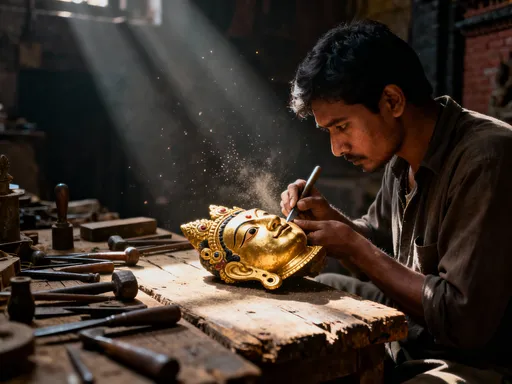
If Patan’s festivals are masterpieces, then its artisans are the unsung authors. For centuries, the city has been a center of Newari craftsmanship, a tradition encompassing metal casting, wood carving, pottery, and mask making. These skills are not hobbies or side trades; they are family legacies, often passed from father to son or master to apprentice within tightly knit communities. The tools may be simple—chisels, hammers, hand-turned lathes—but the results are anything but.
Walk through the alleys of Patan’s old quarter, and you’ll find workshops tucked behind unassuming doors. Inside, artisans bend over bronze sheets, shaping deities with meticulous precision. The lost-wax casting method, used for over 500 years, allows for astonishing detail: the curve of a lotus petal, the folds of a deity’s robe, the expression in a meditating Buddha’s face. These statues are not made for export; they are destined for temples, household shrines, and festival altars, where they will be anointed, adorned, and revered.
Woodcarvers, too, play a vital role. The struts supporting temple roofs are adorned with carvings of deities, mythical beasts, and floral motifs, each piece a narrative in wood. During festival preparations, these craftsmen are busiest, restoring damaged elements or creating new ceremonial objects. One woodcarver in Sundhara shared that his family has worked on the same temples for six generations. “We don’t just repair,” he said. “We listen to what the wood wants to become.”
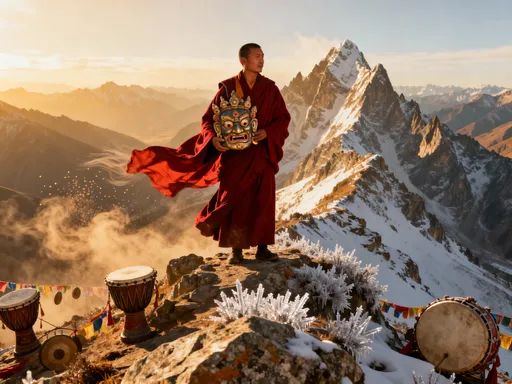
Mask makers occupy a particularly sacred space in this ecosystem. The masks used in Lakhey and Pulukisi dances are not mere props; they are believed to house spiritual energy during performance. Crafted from wood, papier-mâché, and natural pigments, they depict demons, guardians, and ancestral spirits, their exaggerated features designed to convey moral lessons through fear and awe. The making process involves fasting, prayer, and ritual purification, underscoring the belief that art and devotion are inseparable.
What makes Patan’s craftsmanship so compelling is how it moves from private creation to public revelation during festivals. A statue cast in silence emerges in a grand procession. A mask carved in solitude comes alive in dance. This transition—from workshop to street, from hidden labor to shared beauty—is the essence of Patan’s artistic soul.
Machindranath Jatra: Nepal’s Longest Chariot Festival
No festival in Patan embodies the fusion of art, faith, and community quite like the Machindranath Jatra. Lasting nearly a month, this is the longest and most elaborate chariot festival in Nepal, dedicated to the deity Machindranath, revered as a protector of farmers and a bringer of monsoon rains. The festival’s origins are ancient, with records suggesting it has been celebrated for over a thousand years, making it one of the subcontinent’s oldest continuous public rituals.
The centerpiece is a towering wooden chariot, rebuilt each year using traditional joinery techniques—no nails, no metal fasteners. Rising over four stories, the structure is a marvel of craftsmanship, its wheels carved from solid logs and its canopy adorned with hand-embroidered textiles and painted banners. The chariot is pulled through the city by thousands of devotees using thick ropes, their chants rising in unison as they navigate narrow streets and uneven terrain. The movement itself becomes a performance, a testament to collective strength and shared purpose.
Every detail of the chariot is symbolic. The colors—red, yellow, and green—represent energy, prosperity, and nature. The banners depict scenes from Hindu epics, while the deity’s idol, housed within the chariot, is dressed in seasonal attire changed daily. Musicians follow the procession, playing cymbals, drums, and conch shells, their rhythms aligning with the pace of the pull. At night, the chariot is illuminated with oil lamps, casting long shadows on centuries-old buildings, transforming the city into a dreamlike tableau.
What makes Machindranath Jatra a living art form is its impermanence. The chariot is dismantled at the end of the festival, its wood stored for next year’s reconstruction. Nothing is mass-produced; everything is handmade, repaired, and renewed. This cycle of creation and dissolution mirrors the agricultural calendar and the spiritual belief in renewal. For travelers, witnessing this festival is not passive viewing—it is immersion in a cultural heartbeat that has pulsed for generations.
Masked Dances and Sacred Performances: Where Myth Meets Movement
In Patan, dance is not entertainment; it is invocation. Traditional masked dances like the Lakhey and Pulukisi are performed during major festivals, serving as bridges between the human and divine realms. These performances are not open to all; dancers undergo years of training, often beginning in childhood, and must adhere to strict ritual protocols. The masks they wear are not costumes but sacred objects, believed to channel spiritual forces during the performance.
The Lakhey dance, performed primarily during Indra Jatra, features dancers in fearsome demon masks, their bodies wrapped in red and black costumes made from yak hair. The dance is vigorous and rhythmic, with sudden leaps and spins designed to ward off evil spirits. The mask itself—wide-eyed, fanged, with a protruding tongue—is carved to inspire awe and respect. Elders say that when the dancer puts on the mask, he is no longer himself; he becomes the guardian spirit, tasked with purifying the city.
Equally powerful is the Pulukisi, a serpent dance performed by young boys dressed as nagas, or serpent deities. The movements are sinuous and hypnotic, mimicking the flow of water and the coils of a snake. This dance is associated with fertility and protection, and it is believed to ensure balanced rainfall for the coming season. The boys, some as young as eight, train for months under the guidance of elder performers, learning not just the steps but the prayers and fasts that accompany the role.
Behind every performance is a lineage of knowledge. Families in Patan’s Jyapu community, traditionally responsible for ritual arts, preserve choreographies, drum patterns, and costume designs through oral transmission. There are no written scripts; the art lives in memory and muscle. This continuity is fragile—modern education and migration threaten to break the chain—but efforts by cultural organizations and local schools are helping to sustain it.
For a visitor, watching these dances is a deeply moving experience. The thunder of drums, the swirl of color, the intensity of the masked gaze—it all creates an atmosphere of reverence. These are not shows for tourists; they are acts of devotion. Yet, when witnessed with respect, they offer a rare glimpse into a worldview where art, myth, and daily life are inseparable.
Photographing the Unseen: Capturing Art in Motion
For many travelers, especially those who cherish memory-making and storytelling, photography is a natural way to engage with Patan’s festivals. But capturing the essence of these events requires more than a good camera—it demands patience, humility, and cultural awareness. The goal should not be to collect postcard-perfect images, but to document the soul of the moment with integrity.
One of the best vantage points is the upper galleries of Patan Durbar Square, where you can observe processions without obstructing the path. Early morning light, just after sunrise, bathes the red-brick temples in a warm glow, ideal for capturing the quiet moments before the crowds arrive. The alleys leading to Sundhara and Mangal Bazaar also offer intimate frames—children adjusting masks, elders blessing offerings, artisans making last-minute repairs.
When photographing rituals, always prioritize respect over the shot. Avoid using flash during indoor ceremonies or close-ups of masked dancers, as it can be disruptive. Never touch sacred objects or step into restricted areas. If in doubt, ask with a smile and a gesture—most locals appreciate the effort to understand. Some festivals, like the Kumari procession, have specific guidelines about photography; following them is a sign of reverence.
Instead of focusing only on grand spectacles, seek the quiet details: a hand placing marigolds on a threshold, a drumbeat echoing in an empty courtyard, the reflection of a mask in a rain puddle. These images often carry more emotional weight than wide-angle festival panoramas. And when you do capture a powerful moment, consider sharing it in a way that honors its context—through thoughtful captions, donations to local cultural projects, or simply keeping some images private as personal treasures.
Traveler’s Guide: Experiencing Festival Culture Responsibly
Planning a visit to Patan around festival season can be a life-enriching decision, but it requires thoughtful preparation. Major festivals follow the lunar calendar, so dates shift each year. Indra Jatra typically falls in September, Machindranath Jatra spans March to April, and Krishna Janmashtami occurs in August or September. Checking local calendars in advance ensures you don’t miss these transformative events.
When choosing where to stay, consider family-run guesthouses near Patan Durbar Square. Places like traditional Newari homes converted into boutique lodgings offer comfort while supporting the local economy. Many hosts are happy to share stories, recommend hidden courtyards, or even invite you to join a pre-festival meal. Staying locally also means you can experience the quiet beauty of the city at dawn, before the day’s rituals begin.
Engagement is key to a meaningful visit. Attend craft demonstrations at Patan Museum or community centers, where artisans explain their techniques. Purchase handmade items directly from workshops—bronze bells, wooden masks, or handwoven textiles—not as souvenirs, but as gestures of appreciation. If invited to a neighborhood gathering, accept with gratitude. Even simple acts—removing shoes before entering a courtyard, greeting elders with a folded hand—go a long way in building trust.
Cultural sensitivity is non-negotiable. Dress modestly, especially during religious events. Avoid loud conversations or intrusive behavior during ceremonies. Understand that some rituals are private and not meant for public viewing. By approaching Patan with humility and curiosity, you honor the very traditions you’ve come to witness.
Conclusion
Patan’s festival culture isn’t something you simply witness—it’s something you feel in your bones. It reminds us that art isn’t confined to museums; it thrives in streets, in hands, in chants rising at dawn. To walk through Patan during a festival is to step inside a living masterpiece. Every thread of fabric, every stroke of paint, every beat of the drum carries the weight of history and the warmth of human care. For travelers seeking depth, beauty, and truth, this city doesn’t just deliver—it transforms. In a world that often feels fast and fragmented, Patan offers a rare gift: the chance to experience culture as a continuous, breathing work of art.