Budapest from Above: Where the City Unfolds in Golden Light
So, you think you know Budapest? Let me tell you—seeing it from ground level doesn’t do it justice. I’m talking about those sky-high moments when the Danube glitters like liquid silver, Parliament glows in the sunset, and the whole city spreads out like a live map beneath your feet. These viewpoints aren’t just photo ops—they’re soul-stirring experiences. From hilltop fortresses to quiet church towers, I’ll show you where to go for the most breathtaking panoramas. Each offers a unique way to witness the harmony of history, architecture, and natural beauty that defines Hungary’s capital.
The Magic of Perspective
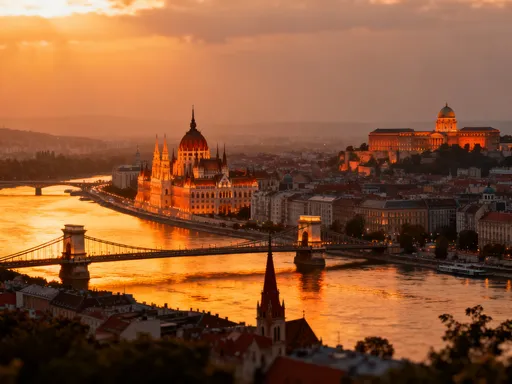
Budapest is a city sculpted by elevation, divided by the Danube, and crowned with hills and spires that beg to be climbed. While many visitors explore its thermal baths, grand boulevards, and vibrant cafés, few truly grasp its grandeur until they rise above it. The city’s layout—Buda’s rolling hills meeting Pest’s flat plains—creates a natural theater of light, shadow, and architectural drama. Viewing Budapest from above transforms a simple sightseeing trip into a layered, emotional journey. It’s one thing to walk past the Hungarian Parliament; it’s another to see it bathed in golden light from across the river, framed by the arches of the Chain Bridge.
What makes these elevated experiences so powerful is their ability to reveal connections. From above, you see how the Danube stitches the city together, how bridges serve as both physical and symbolic links, and how centuries of architecture coexist in harmony. A single vantage point can include a 13th-century castle, a 19th-century parliament, and a 21st-century skyline—all in one sweeping glance. These moments of clarity don’t just impress; they inspire. They remind us that cities, like people, have depth, history, and hidden angles waiting to be discovered.
This guide is designed for travelers who want more than a checklist of attractions. It’s for those who seek understanding, beauty, and quiet awe. Whether you’re an early riser chasing the first light over Gellért Hill or someone who loves the sparkle of city lights after dark, Budapest offers viewpoints that match every mood and moment. We’ll explore historic terraces, sacred domes, fortress summits, and modern rooftops—each with its own story, access method, and visual reward. The goal is simple: to help you see Budapest not just with your eyes, but with your heart.
Fisherman’s Bastion: The Crown Jewel of Skyline Views
Perched atop Castle Hill in Buda, Fisherman’s Bastion is more than a tourist attraction—it’s a masterpiece of perspective. Built between 1905 and 1921 in the neo-Romanesque style, this ornate terrace was designed to honor the medieval fishermen who once defended this stretch of the Danube. Today, it serves a different purpose: offering one of the most iconic panoramic views in Europe. From its seven turrets—symbolizing the seven Magyar tribes that founded Hungary—you can gaze across the river at the symmetrical grandeur of the Hungarian Parliament Building, the sweeping arc of the Chain Bridge, and the bustling streets of central Pest.
What sets Fisherman’s Bastion apart is not just what you see, but how you see it. The white stone arches and fairy-tale towers frame the skyline like a living painting. At sunrise, the Danube reflects the soft pink and gold hues of the morning sky, turning the water into a mirror of light. By midday, the view becomes sharper, revealing the intricate details of Pest’s neoclassical and Art Nouveau buildings. And at dusk, the city ignites—first the streetlights, then the golden dome of Parliament, followed by the warm glow of café windows and bridge lamps.
While the bastion can be crowded during peak hours, timing your visit makes all the difference. Arriving just after opening, around 9:00 a.m., allows for peaceful contemplation and unobstructed photography. Alternatively, returning in the evening, after most day-trippers have left, offers a more intimate experience under the city’s ambient light. The surrounding area, including Matthias Church and the Castle Gardens, enhances the atmosphere, making this more than just a viewpoint—it’s a destination in itself. For families, couples, or solo travelers, Fisherman’s Bastion delivers a moment of awe that lingers long after the descent.
Gellért Hill & the Citadella: Power and Panorama Combined
If Fisherman’s Bastion offers elegance, Gellért Hill delivers raw, commanding power. Rising 235 meters above the Danube, this hill has been a strategic stronghold for centuries. At its summit stands the Citadella, a star-shaped fortress built by Austrian forces in the 1850s after the Hungarian Revolution. Though its origins are military, today it’s a sanctuary of panoramic beauty. From this vantage point, you gain a rare 360-degree view of Budapest—something no other location in the city can offer.
The climb to the top is not for the faint of heart. Whether you choose the winding road, the steep stone steps, or the more gradual pathway from the Gellért Hotel side, the ascent demands effort. But the reward is immediate. At the top, the Liberty Statue—a bronze figure with arms raised—greets you, symbolizing freedom and resilience. Behind it, the entire city unfolds: Buda Castle to the north, the Danube slicing through the urban fabric, the spires of St. Stephen’s Basilica piercing the skyline, and the flat expanse of eastern Pest stretching toward the horizon.
What makes this viewpoint special is its versatility. In the morning, the sun rises over Pest, casting long shadows and soft light across the rooftops. By midday, the city is in full clarity, perfect for spotting landmarks with the naked eye or through binoculars. But the true magic happens at sunset and beyond. As the sun dips behind Buda’s hills, the city begins to sparkle—first in isolated pockets, then in a continuous wave of illumination. Locals gather here with wine, books, or guitars, turning the fortress into a communal balcony for the city. There’s even a small café near the entrance, offering hot drinks and light snacks without requiring you to leave the view behind.
For families, the Citadella is both educational and inspiring. Parents can share stories of Hungary’s past while children marvel at the toy-like scale of cars and trams below. For solo travelers, it’s a place of reflection. And for photographers, it’s nothing short of essential. Whether you come for history, nature, or beauty, Gellért Hill delivers a perspective that feels both expansive and personal.
Buda Castle Terraces: History with a View
While the interior of Buda Castle houses museums and cultural institutions, its outer terraces are where the true spectacle lies. Stretching along the southern edge of the castle complex, these open-air balconies offer some of the most direct and dramatic views of the Danube and Pest. The central terrace, just outside the Hungarian National Gallery, provides a straight-on view of the Hungarian Parliament Building—easily one of the most photographed alignments in the city.
The castle itself is a testament to layered history. First constructed in the 13th century after the Mongol invasion, it has been rebuilt, expanded, and restored over the centuries. Today’s Baroque-style palace was largely shaped in the 18th and 19th centuries, and though it suffered heavy damage during World War II, its reconstruction preserved its grandeur. Walking through the castle gardens, with fountains, sculptures, and manicured hedges, feels like stepping into a royal postcard. But it’s the final ascent to the terraces that takes your breath away.
For visitors with mobility concerns, the castle offers elevators and escalators that connect the lower levels to the main courtyard and terraces. However, walking up through the gardens adds a sense of journey and discovery. Early mornings are particularly enchanting—when fog rolls in from the river, wrapping the city in a soft, dreamlike haze. As the sun rises, the mist slowly lifts, revealing the skyline piece by piece, like a curtain rising on a grand performance.
The terraces are also ideal for understanding Budapest’s urban design. From here, you can trace the path of the Danube, count the seven bridges connecting Buda and Pest, and observe how green spaces—like Margaret Island and City Park—are woven into the city’s fabric. Benches along the railing invite lingering, and informational plaques help identify key landmarks. Unlike more crowded spots, the castle terraces maintain a dignified calm, making them perfect for thoughtful observation. Whether you’re visiting for the view, the history, or the quiet, this is a place that rewards patience and presence.
St. Stephen’s Basilica Dome: A Hidden Ascent in Pest
In the heart of Pest, St. Stephen’s Basilica stands as a monument to faith, resilience, and architectural ambition. Completed in 1905 after nearly a century of construction, this massive Catholic church is named after Hungary’s first king and features a dome that rises 96 meters—matching the height of the Hungarian Parliament, a symbolic gesture of balance between church and state. But what most visitors don’t realize is that the basilica offers public access to its dome, a climb that leads to one of the most rewarding views in the city.
Visitors can reach the viewing platform via a narrow spiral staircase of 364 steps or by elevator, making it accessible to most travelers. The ascent itself is an experience—passing through dimly lit corridors, catching glimpses of the cathedral’s ornate interior, and emerging into a circular gallery just beneath the dome. From here, you can admire the intricate frescoes and golden mosaics up close before stepping out onto the open-air observation deck.
The panoramic view from the dome is astonishing. To the west, Buda Castle and Gellért Hill rise above the river. To the north, the Great Market Hall and the Danube Promenade come into focus. To the east, the urban grid of Pest stretches endlessly, with landmarks like the Dohány Street Synagogue and the Palace District visible on clear days. On the deck, labeled direction markers and free binoculars help you orient yourself and zoom in on distant points of interest.
Twilight is the most magical time to visit. As daylight fades, the city transitions from warm gold to deep blue, and the first lights begin to flicker on. Within minutes, Budapest transforms into a sea of glowing windows, streetlamps, and bridge illuminations. The basilica’s own lights come alive, enhancing its presence in the skyline. For those seeking a moment of peace amid the urban buzz, the dome offers a rare combination of elevation, silence, and beauty. It’s not just a view—it’s a vantage point on life in the capital.
The Danube Promenade: Water-Level Perspectives That Elevate the Soul
Not all great views require elevation. Along the Danube Promenade—especially the stretch between the Chain Bridge and Elisabeth Bridge—Budapest reveals itself in a different way. Here, at eye level with the river, the city’s skyline becomes a living reflection. The water acts as a mirror, doubling the beauty of Parliament, the Buda hills, and the illuminated bridges. Walking this path at night, with the cool breeze off the water and the soft glow of lampposts guiding your way, is one of Budapest’s simplest yet most profound pleasures.
This riverside path is more than scenic—it’s symbolic. Along the way, you’ll encounter the Shoes on the Danube Bank, a powerful memorial honoring Jews who were executed by fascist militias during World War II. Rows of iron shoes, frozen in mid-step, mark where victims were forced to remove their footwear before being shot into the river. The silence around this site is palpable, a reminder that beauty and sorrow often share the same landscape. It’s a moment that invites reflection, not just on history, but on the resilience of the human spirit.
For families, the promenade is safe, well-lit, and stroller-friendly. Couples stroll hand in hand, while solo travelers pause on benches to take in the view. Street musicians often perform near the bridges, adding a soundtrack of violin or accordion to the evening. River cruises depart regularly from nearby docks, offering another way to experience the skyline from the water. Whether you’re walking, sitting, or sailing, the Danube Promenade provides a grounded counterpoint to the city’s high vantage points. It reminds us that sometimes, the best way to appreciate a city is not from above, but alongside it.
Rooftop Bars & Modern Lookouts: Elevated Experiences with a Vibe
For those who want comfort with their panorama, Budapest’s rooftop bars offer a modern twist on the classic viewpoint. These spaces combine stunning scenery with curated hospitality—think warm lighting, plush seating, expertly mixed cocktails, and attentive service. While they come at a price, they deliver a different kind of access: one that blends leisure, luxury, and social connection.
One of the most renowned is 360 Bar, located atop the Budapest Hilton on Erzsébet Square. With a full 360-degree view, it captures every major landmark—from the basilica to the Chain Bridge to the hills of Buda. Open late, it’s perfect for capping off a long day of sightseeing with a glass of Hungarian wine or a signature cocktail. The atmosphere is lively but never overwhelming, attracting both tourists and well-dressed locals.
Another favorite is High Note SkyBar, perched on the roof of the Aria Hotel in the historic district. This intimate venue features a glass-walled lounge and an open terrace surrounded by church spires. The music is often live—jazz or acoustic sets that enhance the romantic mood. From here, you can see Fisherman’s Bastion glowing in the distance, a reminder that you’re surrounded by centuries of history, even as you sip a modern craft drink.
These rooftop experiences are especially meaningful for travelers who value both beauty and comfort. They’re ideal for special occasions, quiet conversations, or simply treating yourself after days of walking. While they may not offer the raw authenticity of a hilltop fortress, they provide a polished, welcoming way to enjoy the city’s skyline. And in a city that honors both tradition and innovation, they represent a natural evolution of the viewing experience.
See Budapest Differently
Viewpoints do more than offer great photos—they change how you understand a city. In Budapest, every elevated moment reveals layers of history, beauty, and soul. Whether standing on ancient stone at the Citadella, stepping out onto the dome of St. Stephen’s Basilica, or sipping a cocktail at a rooftop bar, you’re not just observing the city—you’re connecting with it. You begin to see the relationships between its parts: how the river binds Buda and Pest, how light transforms architecture at different hours, and how people have shaped and been shaped by this landscape for centuries.
These experiences are not just for photographers or adventurers. They’re for anyone who seeks a deeper understanding of place. For the 30- to 55-year-old traveler—often balancing family, work, and personal renewal—Budapest’s viewpoints offer a rare gift: moments of stillness, clarity, and wonder. They remind us that even in a busy world, there are places where time slows, where beauty is undeniable, and where perspective can be restored.
So next time you visit Budapest, don’t just walk the streets. Look up. Climb high. Let the city unfold beneath you in golden light. Whether at dawn, midday, or under a sky full of stars, these views will stay with you—not just as memories, but as touchstones of what travel can truly be: transformative, emotional, and deeply human.