You Won’t Believe What I Found Shopping in Napier’s Cultural Hotspots
Napier, New Zealand, isn’t just about art deco architecture and ocean views—its cultural venues hide some of the most unique shopping experiences I’ve ever stumbled upon. Wandering through repurposed theaters, local galleries, and heritage buildings, I discovered handmade treasures, Māori crafts, and boutique stores bursting with personality. This is shopping with soul, where every purchase tells a story. If you think retail is all malls and chains, Napier will completely change your mind. Here, commerce and culture are woven together, creating a rhythm that feels both timeless and refreshingly modern. It’s not about buying more—it’s about choosing meaning, connection, and authenticity.
The Art Deco Heartbeat: Shopping Where History Lives
Napier’s architectural identity was forged in the aftermath of a tragedy—the devastating 1931 earthquake that destroyed much of the city. From the rubble emerged a bold new vision, one defined by streamlined curves, geometric symmetry, and sunburst motifs. Today, the city stands as one of the world’s most intact examples of art deco design, and its historic buildings are not museum pieces frozen in time. They are living, breathing spaces where commerce and culture thrive. Walking through the central district feels like stepping into a carefully preserved film set, except here, the story continues with every shop door that opens.
What makes shopping in Napier so distinctive is how deeply the architecture influences the experience. Stores aren’t simply housed in art deco buildings—they are enhanced by them. The play of light through stylized glass, the cool shadow of stepped façades, and the rhythmic repetition of design elements create a sensory backdrop that transforms a casual browse into a curated journey. A jewelry boutique nestled in a former bank on Tennyson Street uses the original vault as a display case, its iron door now a dramatic frame for handcrafted pendants. Another shop, located in a building with a ziggurat rooftop, sells vintage-inspired clothing that echoes the 1930s elegance of its surroundings.
These spaces invite slow exploration. There’s no rush, no fluorescent glare of a shopping mall. Instead, there’s a quiet dignity to each storefront, a sense that what’s inside deserves attention. The architecture itself becomes a silent salesperson, suggesting quality, craftsmanship, and timelessness. Visitors often come for the photos but stay for the finds—locally designed ceramics, artisanal candles, and stationery printed on handmade paper. Each store reflects not just the owner’s taste but a respect for the building’s legacy.
For travelers, especially those in their 30s to 50s who value both beauty and meaning, this blend of history and retail is deeply satisfying. It’s shopping that doesn’t feel transactional. You’re not just buying a scarf or a book—you’re engaging with a place that remembers its past and celebrates its present. The city’s commitment to preservation means that even new businesses are required to honor the architectural style, ensuring that authenticity remains intact. This isn’t themed retail; it’s genuine, rooted in a community that takes pride in its identity.
Hawke’s Bay’s Creative Pulse: Galleries That Double as Boutiques
In Napier, art is not confined to white-walled galleries meant only for viewing. It spills into the marketplace, where creativity and commerce coexist in a harmonious balance. Local galleries frequently serve as retail spaces, offering visitors the chance to take home more than just memories. At MTG Hawke’s Bay, the region’s premier museum and cultural center, the exhibition spaces are complemented by a well-curated shop that features works by both Māori and Pākehā (non-Māori New Zealanders) artists. Here, you’ll find hand-carved pounamu (greenstone) pendants, woven flax accessories, and limited-edition prints that carry the spirit of the land.
What sets these items apart from typical tourist souvenirs is their authenticity. Each piece tells a story—of ancestral connection, natural inspiration, or personal expression. A pounamu pendant, for example, might be shaped like a hei tiki, a traditional Māori symbol representing ancestry and fertility, or a twist, symbolizing the joining of two paths. These are not mass-produced trinkets but meaningful objects crafted with intention. The artists often include information about the materials used, the cultural significance of the design, and their own background, creating a transparent and respectful exchange.
Supporting these galleries means supporting living artists and cultural preservation. When you purchase a handwoven kete (basket) made from harakeke (New Zealand flax), you’re not only acquiring a beautiful item but also contributing to the continuation of traditional Māori weaving practices. These crafts have been passed down through generations, and each new piece helps keep the knowledge alive. Many artists are happy to share insights if asked respectfully, though it’s important to approach cultural items with humility and awareness.
Visitors are encouraged to learn before they buy. Understanding the meaning behind a design fosters deeper appreciation and ensures that cultural elements are not reduced to mere aesthetics. For example, the koru, a spiral shape based on an unfurling fern frond, symbolizes new life, growth, and harmony. When worn or displayed, it carries that intention. Buying such an item with awareness transforms it from decoration into a personal emblem. The galleries in Napier make this education accessible, often pairing artwork with interpretive labels that explain both the technique and the cultural context.
The Tiniwha Trail: Hidden Courtyards and Cultural Pop-Ups
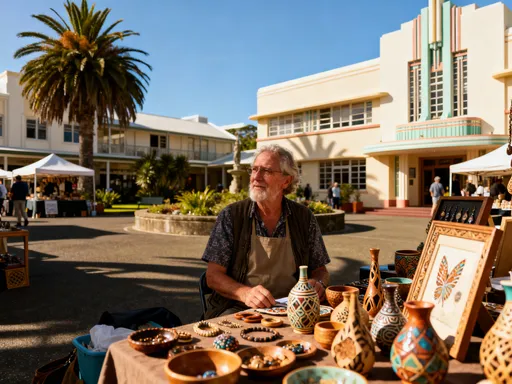
Away from the main thoroughfares, Napier’s laneways and courtyards come alive with seasonal energy. Known informally as the Tiniwha Trail—a nod to the Māori concept of small, hidden treasures—these tucked-away spaces host pop-up markets, artisan fairs, and cultural events throughout the year. I discovered one such market on a golden Saturday morning, tucked behind a restored theater on Emerson Street. Sunlight filtered through a canopy of vines, illuminating tables filled with hand-thrown ceramics, natural skincare made with local botanicals, and kai (food) wrapped in reusable beeswax cloth.
What made this experience unforgettable was the direct connection with the makers. A potter demonstrated her wheel-throwing technique, explaining how she uses clay sourced from nearby riverbeds. A woman in a sunhat sold lavender-infused soap, sharing stories of her family’s herb garden in Hastings. These interactions transformed shopping into conversation, and commerce into community. Unlike impersonal online transactions, these moments foster trust and authenticity. You can see the care in the stitching of a linen apron, smell the honey before you taste it, and hear the pride in a jeweler’s voice as she describes her process.
Many of these pop-ups are tied to cultural celebrations. During Matariki, the Māori New Year marked by the reappearance of the Pleiades constellation, the city hosts a series of events that include night markets, storytelling, and craft demonstrations. Similarly, the annual Art Deco Festival turns the entire city into a living celebration, with vintage fashion stalls, live music, and temporary boutiques in repurposed spaces. Timing your visit to coincide with these events can lead to once-in-a-lifetime finds—limited-edition prints, festival-exclusive clothing, or handmade ornaments that reflect the season’s theme.
For travelers seeking something beyond the ordinary, these fleeting experiences offer a sense of discovery. There’s an excitement in not knowing exactly what you’ll find, in turning a corner and stumbling upon a woman selling hand-dyed silk scarves using native plant pigments. These moments feel serendipitous, yet they are made possible by a city that actively nurtures its creative community. Local councils and business associations support these initiatives, providing permits, infrastructure, and promotion to ensure they thrive.
From Vineyard to Storefront: Local Flavors as Cultural Keepsakes
Hawke’s Bay is renowned for its fertile soil, sunshine, and world-class wines, and Napier’s cultural venues reflect this agricultural richness. Shopping here often includes a taste of the region—not just in dedicated wine shops but in galleries, heritage centers, and boutique stores that feature locally made food and drink. I found beautifully packaged olive oils from coastal groves, small-batch honey infused with manuka or tawari flower, and artisanal preserves made from stone fruit grown just minutes from the city.
These edible souvenirs are more than just gifts—they are sensory reminders of place. A bottle of chardonnay from a family-run vineyard carries the terroir of the region, its flavor shaped by the same sun and soil that inspire the local art. When you open it months later, you’re not just enjoying a drink; you’re reliving a moment, a landscape, a conversation with the winemaker who poured your tasting. Similarly, a jar of quince jam made by a local grandmother using a generations-old recipe connects you to the domestic heart of Hawke’s Bay life.
Many cultural venues partner directly with producers to showcase these goods. MTG Hawke’s Bay, for instance, features a shop that highlights regional artisans, from cheesemakers to cider brewers. The selection changes seasonally, ensuring freshness and variety. A summer visit might bring jars of raspberry vinegar and rose petal jelly, while autumn offers spiced apple butter and merlot-infused chocolate. These items are presented with care—simple labels, eco-friendly packaging, and stories that honor the maker.
Purchasing local food products supports small-scale agriculture and sustainable practices. Unlike imported goods, these items have a low carbon footprint and contribute directly to the regional economy. For travelers, especially those who enjoy cooking or entertaining, they make thoughtful, meaningful gifts. Imagine sending a care package to a friend with a bottle of Napier pinot gris, a bar of olive oil soap, and a packet of sea salt harvested from the coast. It’s not just a gift—it’s an invitation to experience a place through its flavors.
Crafting Connection: Workshops That Let You Take More Than a Purchase
One of the most transformative aspects of shopping in Napier is the opportunity to go beyond buying and actually create. Several cultural venues offer hands-on workshops where visitors can learn traditional crafts and leave with a handmade keepsake. I participated in a flax weaving session led by a local Māori weaver at a community arts center. Using harakeke leaves that had been soaked and softened, I learned to plait a simple bracelet under her gentle guidance. The process was meditative, requiring focus and patience, and the finished piece felt infinitely more valuable than anything I could have bought.
These workshops do more than teach a skill—they build connection. As we worked, the instructor shared stories about the significance of weaving in Māori culture, how patterns carry meaning, and how the practice strengthens whānau (family) bonds. I wasn’t just making a bracelet; I was participating in a living tradition. The experience deepened my respect for the art form and made me more thoughtful about the handmade items I later encountered in shops.
Other venues offer glassblowing demonstrations, pottery classes, and natural dye workshops using native plants. Some are drop-in sessions, while others require advance booking, but all emphasize accessibility. No prior experience is needed, and the focus is on enjoyment rather than perfection. For families, couples, or solo travelers, these activities provide a meaningful way to spend an afternoon—engaged, creative, and present.
Bringing home a self-made object changes the nature of souvenirs. It’s no longer about what you acquired, but what you did. That flax bracelet will fade over time, but the memory of making it—the smell of the leaves, the rhythm of the plaiting, the warmth of the instructor’s voice—will remain vivid. It becomes a tactile anchor to a moment of connection, far more powerful than any mass-produced trinket.
Beyond the Main Strip: Neighborhood Gems Off the Tourist Radar
While Marine Parade draws the crowds with its ocean views and iconic architecture, the quieter streets of Napier hold some of its most authentic retail treasures. Tennyson Street, Beethoven Street, and the lanes branching off Dalton Square are home to independent designers, vintage boutiques, and second-hand stores with curated charm. These are not souvenir shops filled with postcards and keychains. They are spaces shaped by individual passion—run by artists, collectors, and visionaries who care deeply about what they offer.
I wandered into a vintage clothing store on Tennyson Street that felt like stepping into a 1930s film. Mannequins wore silk dresses with intricate beading, while racks held wool coats, brooches, and gloves—each piece carefully selected for quality and style. The owner, a woman in her 50s with a sharp eye for detail, shared the history of a 1940s fur-collared coat she had restored. It wasn’t about selling; it was about storytelling. Another shop, a record store on Beethoven Street, spun local vinyl from Hawke’s Bay musicians, its walls lined with jazz, folk, and Māori music collections.
These neighborhood spots reflect Napier’s living culture—its present as much as its past. They’re where locals shop, where trends are quietly set, and where originality thrives without the pressure of tourism. Prices are often fair, with no markup for the sake of visitors. Because these stores depend on community support, they treat every customer with genuine warmth and attention.
Exploring these areas requires a slower pace, a willingness to wander without a map. But the rewards are worth it—a hand-knit baby blanket made with merino wool, a vintage cookbook from the 1950s, or a local artist’s sketchbook filled with Napier scenes. These finds carry the quiet dignity of authenticity, free from the noise of commercialism.
Shopping with Meaning: How to Support Napier’s Culture Responsibly
Not all shopping in cultural spaces is created equal. As I explored Napier, I learned to distinguish between authentic local art and mass-produced imports disguised as handmade goods. The key is mindfulness. Look for artist labels, information about materials, and transparent pricing. If a pounamu pendant is priced at $20, it’s unlikely to be genuine—true greenstone is rare and labor-intensive to carve. Similarly, a kete woven from harakeke should feel sturdy and slightly textured, not smooth like synthetic fiber.
Supporting genuine creators ensures that Napier’s culture continues to thrive. When you buy from a local artist, you’re not just purchasing an object—you’re investing in a practice, a livelihood, a legacy. Many shops proudly display bios of their makers, listing their iwi (tribe) affiliation, location, and process. This transparency builds trust and deepens the value of the purchase.
It’s also important to approach cultural items with respect. Māori designs are not merely decorative; they carry spiritual and ancestral significance. Wearing a hei tiki, for example, is a personal choice that should be made with understanding. If you’re unsure, ask—most artists and shopkeepers are happy to explain, and your interest is often appreciated.
Mindful shopping also means considering sustainability. Many Napier stores use minimal packaging, encourage reusable bags, and source materials locally. By choosing these businesses, you support environmental responsibility as well as cultural integrity. Your visit becomes part of a larger cycle of care—one that honors people, place, and tradition.
Shopping in Napier’s cultural venues isn’t about filling a suitcase—it’s about carrying a piece of a place home. When you buy from artists, makers, and heritage spaces, you become part of a living tradition. My biggest takeaway? The best souvenirs aren’t things you find—they’re experiences you make. Next time you’re in New Zealand, skip the generic gift shops. Let Napier show you how shopping can be soulful, sustainable, and deeply human.